The Blazer Outfit Formula for Every Occasion
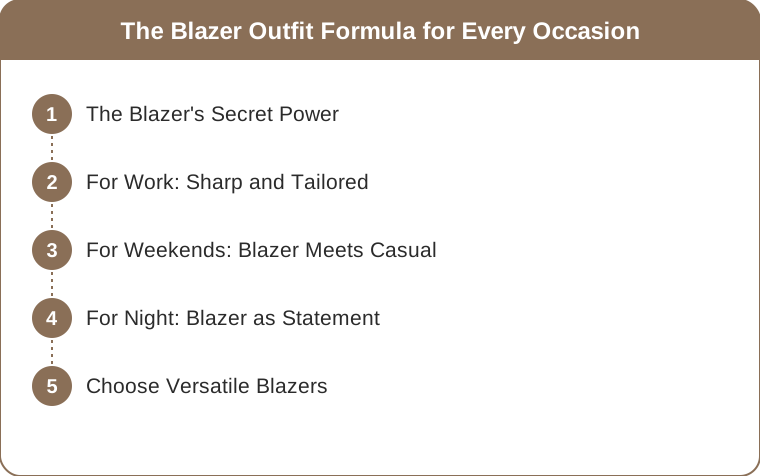
Quick Answer: One blazer covers three occasions with three formulas. Work: fitted blazer + tailored trousers or a pencil skirt. Weekend: relaxed blazer + jeans + tee + sneakers. Night: blazer over a slip dress, or worn as a top with nothing under it. If you’re buying one, get a neutral in a mid-weight fabric with shoulder seams that sit exactly at your shoulder — that fit detail decides everything else.
The blazer might be the single most versatile piece in fashion. The same jacket can look corporate at 9am, casual at noon, and genuinely glamorous at 9pm, and the only thing that changes is what’s under it.
The trick is having a formula for each context rather than improvising every time. Three formulas, memorized, and the blazer becomes the answer to almost any “what do I wear” moment.
Here they are — plus the fit rule that determines whether any of them work.

Why Does a Blazer Work Everywhere?
One reason: it’s the fastest way to add structure to an outfit.
Structure is what separates “put together” from “comfortable,” and most of what we own is soft. A blazer supplies a defined shoulder line and a clean vertical edge down the front, which raises the perceived formality of everything else in the outfit by roughly one level.
That’s why the same jacket makes trousers look corporate and jeans look intentional. It isn’t changing — it’s changing what’s around it.
It’s also the reason a blazer over a t-shirt reads as a decision while a t-shirt alone reads as a default.
For Work: Sharp and Tailored
The formula: fitted blazer + tailored bottom + simple top.
The bottom does the work of setting formality alongside the jacket. Tailored trousers, a pencil skirt, or a well-cut wide-leg. The more structured the bottom, the more corporate the read.
The top stays simple. A fine-gauge knit, a silk shell, a crisp shirt. The blazer is the interesting piece; a busy top competes with it.
The matching question: a blazer and trousers in the same fabric is a suit and reads most formal. Different fabrics at the same level of dressiness — a wool blazer over crisp cotton trousers — reads modern and is more versatile. Both are correct; pick based on your workplace.
Sleeve length matters here more than anywhere. The blazer sleeve should end at your wrist bone, showing roughly a quarter inch of any shirt cuff underneath. It’s the detail that separates “wearing a blazer” from “wearing a blazer that fits.”

For Weekends: Blazer Meets Casual
The formula: relaxed blazer + jeans + tee + clean sneakers or loafers.
The whole appeal is high-low contrast. Something structured over something genuinely casual reads deliberate in a way that either alone doesn’t.
A few things make it work rather than look like you came from the office:
Choose a softer blazer. An unstructured or lightly structured jacket — less padding, softer shoulder — sits better with denim than a sharp corporate one.
Push the sleeves up. Three-quarter length instantly signals casual. It’s a two-second change that shifts the whole register.
Keep the tee simple. Plain white, grey, or black. A graphic tee under a blazer is a specific look and a harder one to land.
Shoes seal it. Clean white sneakers or loafers. The moment you add a heel, you’re back at work.
Dark, undistressed denim if you want the outfit to skew smart; anything more casual and the blazer starts to look stranded.
For Night: Blazer as Statement
The formula: blazer + something fluid, or blazer as the top.
Over a slip dress is the reliable version. Satin or silk underneath, structure over it — the contrast between fluid and sharp is what makes it read as evening rather than office.
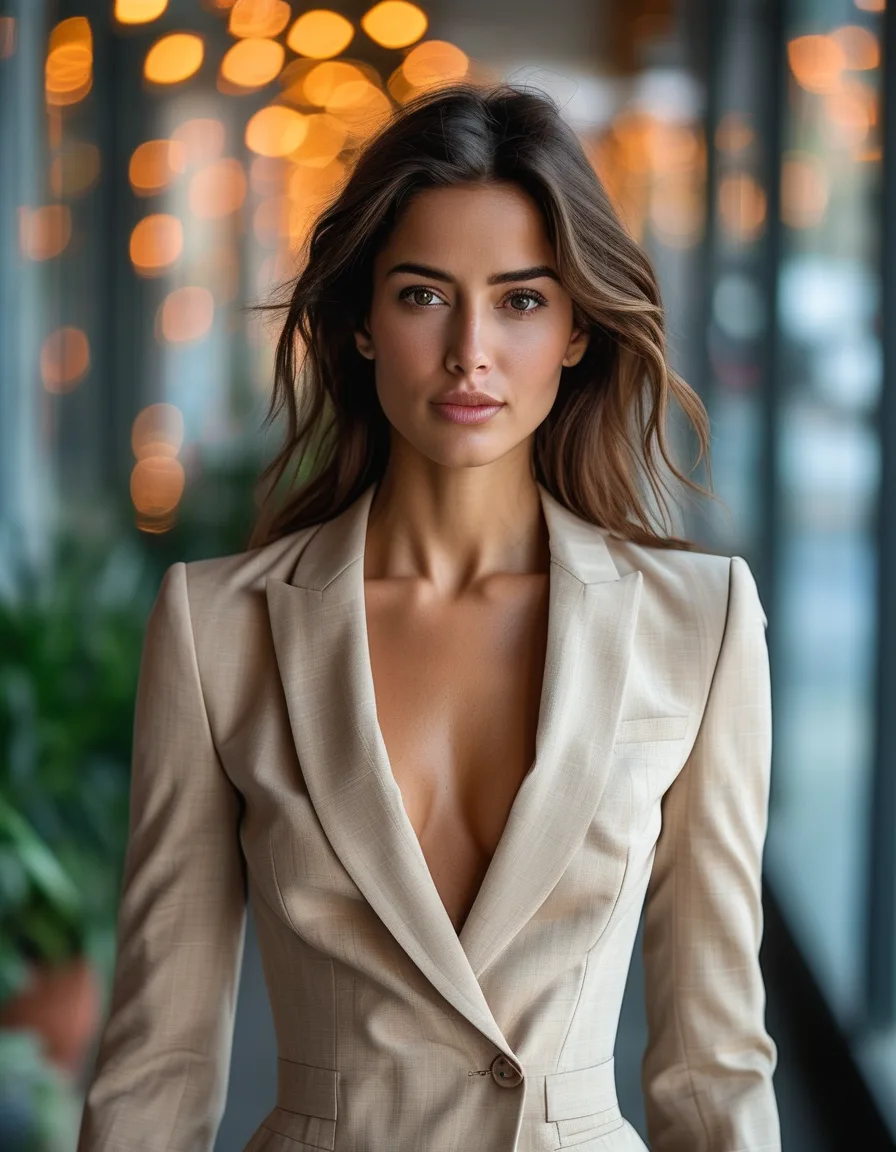
Worn alone as a top is the bolder version. A well-fitted blazer buttoned with nothing underneath, paired with trousers or a skirt. This needs a jacket that actually fits through the chest, and it needs to be one you can move in comfortably.
Add exactly one focal point. A statement earring, a bold lip, or a striking shoe. The blazer is already doing something; two statements start arguing.
Fabric shifts the register. A blazer in satin, velvet, or anything with a sheen reads evening immediately. A wool one needs the outfit around it to do more work.
Choosing a Blazer That Does All Three
If you’re buying one blazer to cover everything, here’s the specification.
Colour: a neutral. Navy, charcoal, black, or camel. Navy is the most versatile across all three occasions.
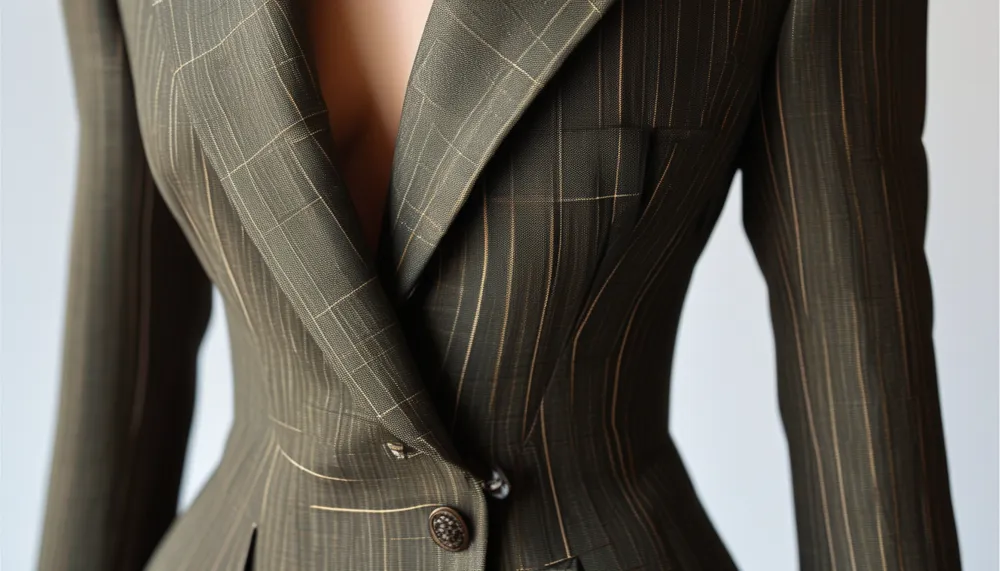
Fit at the shoulder is non-negotiable. The shoulder seam should sit exactly where your shoulder ends — not past it, not inside it. Everything else on a blazer can be altered; shoulders effectively can’t.
Check the button. With the jacket buttoned, you should be able to fit a flat hand between the button and your body. Any tighter and it pulls into an X across the front.
Mid-weight fabric. Heavy wool is winter-only; unlined linen is summer-only. A mid-weight wool blend with a bit of stretch works nine months a year.
Length: around mid-hip. Long enough to cover the seat of your trousers, short enough not to shorten your leg line.
A great cut genuinely does half the work here. One well-fitting neutral blazer outperforms three mediocre ones, and it’s worth spending disproportionately on.
5 Mistakes Everyone Makes
- Buying for the button rather than the shoulder. People size up until the jacket closes comfortably and end up with shoulders hanging off their arms. Fit the shoulders; a tailor handles the rest.
- Leaving the sleeves at factory length. Blazer sleeves come long by default and almost everyone needs them shortened. It’s a $20 alteration that changes how the whole jacket reads.
- Wearing the office blazer on the weekend. A stiff, structured corporate jacket over jeans looks like you came from work. Use a softer one and push the sleeves up.
- Two statements at once. A dramatic blazer plus a dramatic shoe plus a bold lip is three things competing. Pick one.
- Never buttoning it. An open blazer creates two flattering vertical lines, which is great — but a jacket that has never once been buttoned is usually one that doesn’t actually fit. Check that it can close cleanly even if you rarely do.
Mini FAQ
What color blazer is the most versatile?
Navy. It works across all three occasions, pairs with more colors than black, and reads slightly less severe in casual settings. Black is the runner-up and is stronger for evening; camel is the most interesting but slightly less flexible.
Can you wear a blazer with jeans?
Yes — it’s one of the strongest casual formulas there is. Use a softer, less structured blazer, dark undistressed denim, a plain tee, and sneakers or loafers. Push the sleeves up to keep it from reading as work clothing.
How should a blazer fit?
The shoulder seam sits exactly at the edge of your shoulder, the sleeve ends at your wrist bone, and when buttoned you can slide a flat hand between the button and your body without the front pulling. Shoulders are the one thing a tailor can’t easily fix — get those right in the store.
TL;DR:
- A blazer adds structure, which raises the formality of everything around it. That’s the whole mechanism.
- Work: fitted blazer + tailored bottom + simple top. Sleeve ends at the wrist bone.
- Weekend: softer blazer + dark jeans + plain tee + sneakers, sleeves pushed up.
- Night: over a slip dress, or worn as the top. One focal point only.
- Buying one: navy, mid-weight, mid-hip length, and shoulder seams that sit exactly at your shoulder.
A blazer is the closest thing to a wardrobe cheat code. Sharp for the office, casual over jeans, bold for evening — one great one really does go anywhere.
Keep Reading
This article is for general styling and informational purposes only. Trends, sizing, availability and pricing may vary by brand and season.