Why Blazer Sleeve Length Should Show a Half Inch of Shirt Cuff, Not Zero
Blazer sleeve length gets judged mainly by whether it covers the wrist completely, treating full coverage as the safer, more polished choice. But a sleeve that runs all the way to the wrist bone, or past it, hides the shirt cuff entirely and reads as slightly oversized, while leaving a half inch of cuff visible is the detail that actually signals deliberate tailoring.

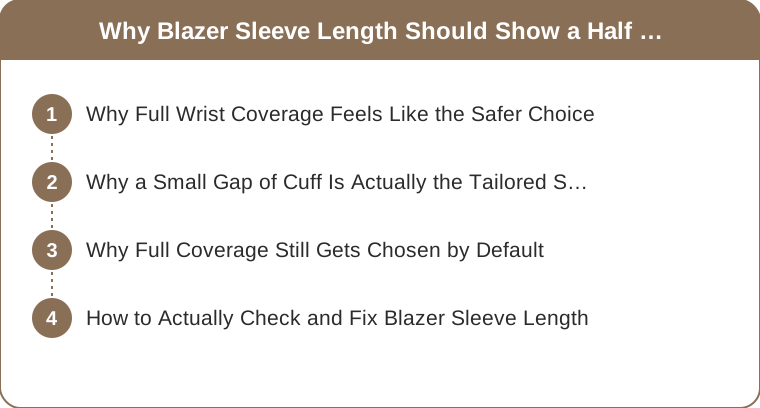
Why Full Wrist Coverage Feels Like the Safer Choice
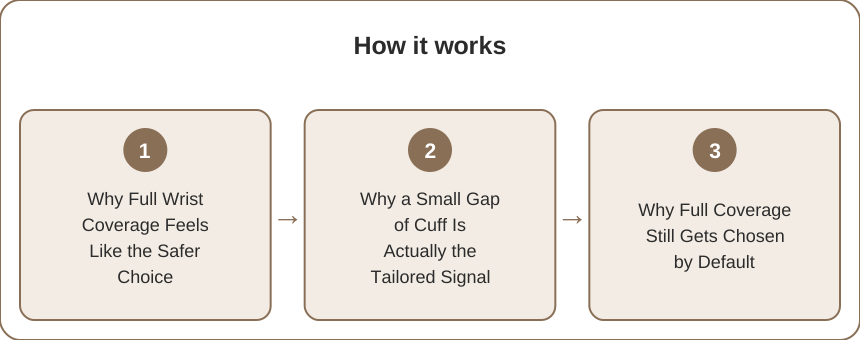
The coverage-as-polish assumption: a sleeve that fully covers the wrist looking neat and complete at first glance, which makes longer sleeve length feel like the safer, more finished-looking option when trying on a blazer.
Why a Small Gap of Cuff Is Actually the Tailored Signal
The proportion detail: a blazer sleeve ending roughly at the wrist bone, showing about half an inch of shirt cuff underneath, being the classic marker of a jacket sized and tailored specifically to the wearer, since a sleeve that runs longer than that reads as borrowed from a bigger size rather than fitted.

Why Full Coverage Still Gets Chosen by Default
The overlap: off-the-rack blazers are frequently cut with longer sleeves as a safe general fit across many arm lengths, which means the visible-cuff detail often isn’t available without a simple alteration, so most people wear the sleeve as it comes rather than adjusting it.
How to Actually Check and Fix Blazer Sleeve Length
The practical fix: checking in a mirror with arms relaxed at the sides for a visible half inch of shirt cuff, and having sleeves shortened by a tailor if the blazer runs past the wrist bone, since it’s a quick, inexpensive adjustment, and the frame (a half inch of visible shirt cuff signals deliberate tailoring — checking and adjusting sleeve length is a small fix with an outsized effect on polish.)
Blazer sleeve length gets judged mainly by whether it covers the wrist completely, treating full coverage as the safer choice. But a sleeve ending roughly at the wrist bone, showing about half an inch of shirt cuff underneath, is the classic marker of a jacket tailored to the wearer, while a longer sleeve reads as borrowed from a bigger size. Off-the-rack blazers are frequently cut with longer sleeves as a safe general fit, so the visible-cuff detail often isn’t there without alteration. Checking for that half inch of cuff and having sleeves shortened by a tailor if needed is a small fix with an outsized effect on polish.
Keep Reading
This article is for general styling and informational purposes only. Trends, sizing, availability and pricing may vary by brand and season.