How to Wear a Blazer Without Looking Corporate
Quick Answer: To wear a blazer without looking corporate, break the suiting signals: pair it with a vintage tee or worn-in denim, size up for a relaxed shoulder, choose cream, camel, check or linen instead of charcoal, and finish with sneakers or chunky loafers. The tailoring stays — the office association goes.
Blazers escaped the boardroom years ago. Nobody told some blazers.
Styled the wrong way, a good jacket still reads office party — the kind where someone’s about to hand you a name badge. Styled right, it’s the sharpest thing you’ll wear all week.
The difference comes down to four decisions.

How do you make a blazer look casual?
Pair it with something deliberately relaxed. A vintage tee, worn-in denim, a plain tank, a hoodie if you’re committing.
That tension between structure and ease is the entire effect. The blazer supplies polish; the casual piece supplies the message that you’re not at work. Two matched-formality pieces read as a uniform; one structured plus one relaxed reads as style.
The easiest version: blazer, white tee, straight jeans, sneakers. It’s been the default off-duty formula for a decade because it never stops working.
Does an oversized blazer look better than a fitted one?
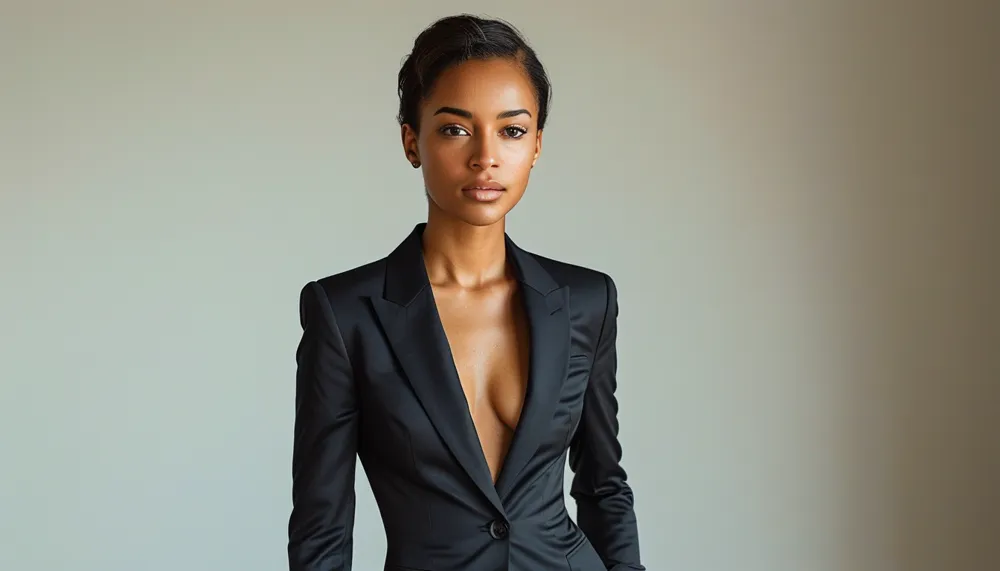
For non-corporate wear, usually yes. A slightly oversized blazer instantly reads more fashion than business — the relaxed shoulder and longer line are the visual opposite of a suit jacket.
What to look for: the shoulder seam sitting just past your natural shoulder (not four inches past), a sleeve you can push to the elbow, and enough length to balance the extra width. Over slim trousers, straight jeans or bike shorts, that relaxed line does the work on its own.
What to skip: anything nipped, stiff and short. That’s the silhouette your brain files under “suit,” and no amount of styling below will override it.

Which colors and fabrics avoid the corporate look?
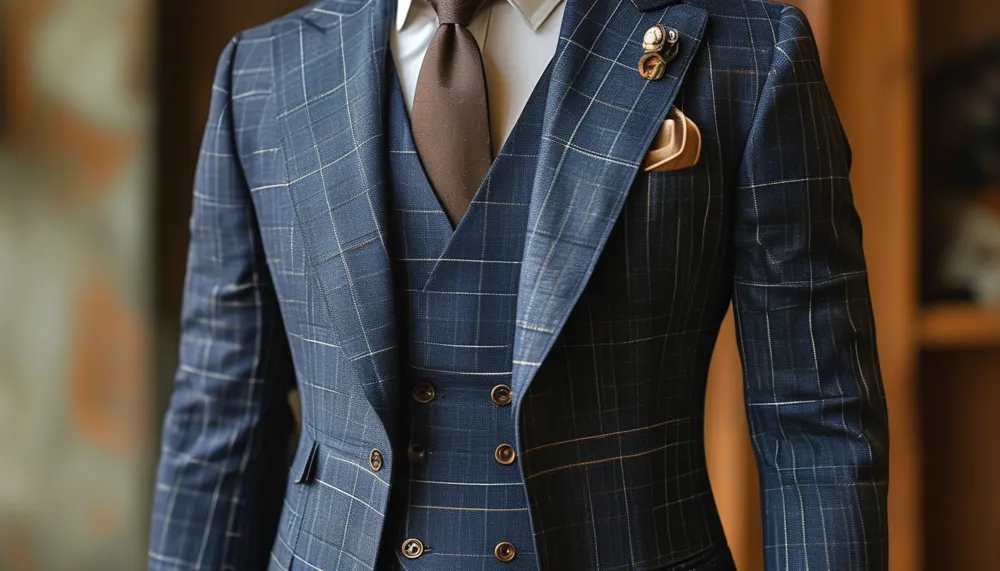
Charcoal and navy in smooth worsted wool are the suit-blazer signals. Step away from both.
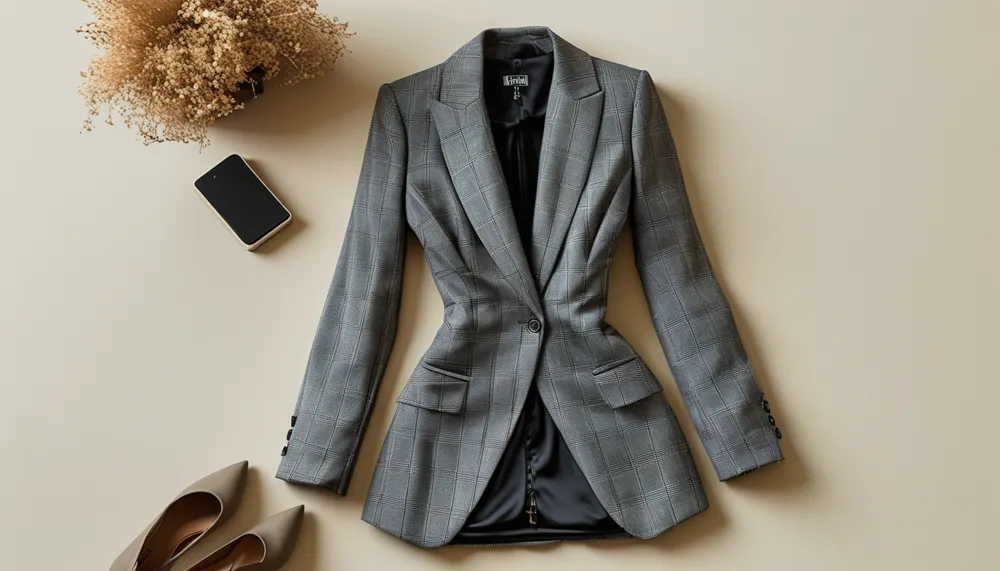
Colors that read style, not work: cream, camel, chocolate, sage, a soft check, anything in the warm neutral range. Even a black blazer stops reading corporate when the fabric is relaxed rather than crisp.
Fabrics that help: linen (wrinkles included — they signal fabric, not carelessness), cotton twill, soft wool blends, corduroy in cooler months, anything unlined or half-lined. An unlined jacket drapes rather than holds a shape, which is the single fastest way to soften a blazer.
Unexpected color and texture do the work of a whole outfit. They announce “style choice” before anyone gets to the details.

What accessories tip it off-duty?
This is where a borderline outfit lands firmly on the right side.
- Roll the sleeves. Two turns, forearm showing. Costs nothing, changes everything.
- Ground it with the right shoes. Chunky loafers, clean white sneakers, or boots. Not a court heel — that’s the office again.
- Add gold jewelry and sunglasses. Both read personal rather than professional.
- Skip the matching trouser. The moment the bottom half matches, you’ve built a suit.
One more: leave it open. A buttoned blazer over a shirt is business posture; an open blazer over a tee is not.
Four outfits to copy directly
- Blazer + white tee + straight jeans + white sneakers. The default. Works nine months of the year and requires no thought whatsoever.
- Oversized blazer + tank + bike shorts + loafers. The warm-weather version, and one of the few ways to make shorts look considered.
- Check blazer + black tee + black trousers + boots. The pattern does the talking; everything else stays quiet.
- Linen blazer + slip dress + flat sandals. Structure over something fluid, which is the contrast that makes both pieces look better.
Each of these follows the same logic: one structured piece, everything else relaxed, shoes that aren’t office shoes. Once you see the pattern you can build your own without a list.
Myth vs Fact: blazers off duty
Myth: A blazer is inherently formal. Fact: Formality lives in fabric, fit and pairing, not in the garment category. A linen blazer over a tee and jeans is one of the most casual structured pieces you can wear.
Myth: Oversized blazers only work on tall frames. Fact: They work at any height when the proportions are managed — a shorter overall length, sleeves shortened to hit the wrist, and a slimmer bottom half. The relaxed shoulder is the point; excessive length is the thing to alter.
Myth: You need a different blazer for casual and for work. Fact: One relaxed blazer in a warm neutral covers both if you change what’s underneath. The tee and sneakers version and the shirt and loafers version are the same jacket doing two jobs.
Frequently Asked Questions
What do you wear under a blazer to look casual?
A plain or vintage tee, a fine-knit tank, or a soft henley. Keep the neckline simple and the fabric relaxed — a crisp button-down under a blazer is the fastest route back to looking like you’re headed to a meeting.
Should a casual blazer be buttoned or open?
Open, almost always. An open blazer creates vertical lines and a relaxed line through the body; buttoning it restores the structured, business-jacket silhouette you’re trying to move away from.
What color blazer is most versatile for non-work outfits?
Camel or cream. Both are warm neutrals that pair with denim, black, white and most of what’s already in your closet, and neither carries the suiting associations that charcoal and navy do.
TL;DR:
- Soften the blazer with deliberately casual pieces — vintage tee, worn denim, a plain tank
- Size up for a relaxed shoulder and longer line; skip anything nipped and stiff
- Choose cream, camel, check or linen over charcoal, and prefer unlined or half-lined
- Roll the sleeves, wear sneakers or chunky loafers, add gold jewelry and sunglasses
- Wear it open, and never pair it with a matching trouser unless you want a suit
Keep Reading
This article is for general styling and informational purposes only. Trends, sizing, availability and pricing may vary by brand and season.