The Blazer Edit

Tailoring that makes every look sharper

The Linen Blazer: Structure That Breathes

2026-07-15

Quick Answer: A linen blazer gives you tailoring’s silhouette at summer temperatures because linen moves air and wicks moisture in a way lined synthetic tailoring can’t. Buy it unlined or half-lined in a relaxed cut — sharp tailoring fights linen’s wrinkles and loses. Steam rather than iron, hang it always, and choose naturals like oatmeal, sand or olive, which hide creases better than dark colors.

Tailoring has a summer problem. Authority requires structure. Structure traps heat. And by July the blazer that makes you look competent also makes you look damp.

The answer isn’t a lighter-colored version of the same jacket. It’s a different fiber.

The Linen Blazer: Structure That Breathes

Why is linen better than “lightweight” summer tailoring?

Linen’s fibers are hollow and highly conductive, which means the fabric moves both air and moisture unusually well. A linen blazer at 86°F genuinely outperforms a “lightweight” polyester-blend jacket at 75°F, because the synthetic traps everything the linen releases.

But the fiber only gets you halfway. The construction has to agree with it. An unlined or half-lined jacket lets air actually pass through; a fully lined linen blazer defeats the entire argument for buying linen in the first place.

So the buying instruction is short: unlined or half-lined, or don’t bother.

What about the wrinkles?

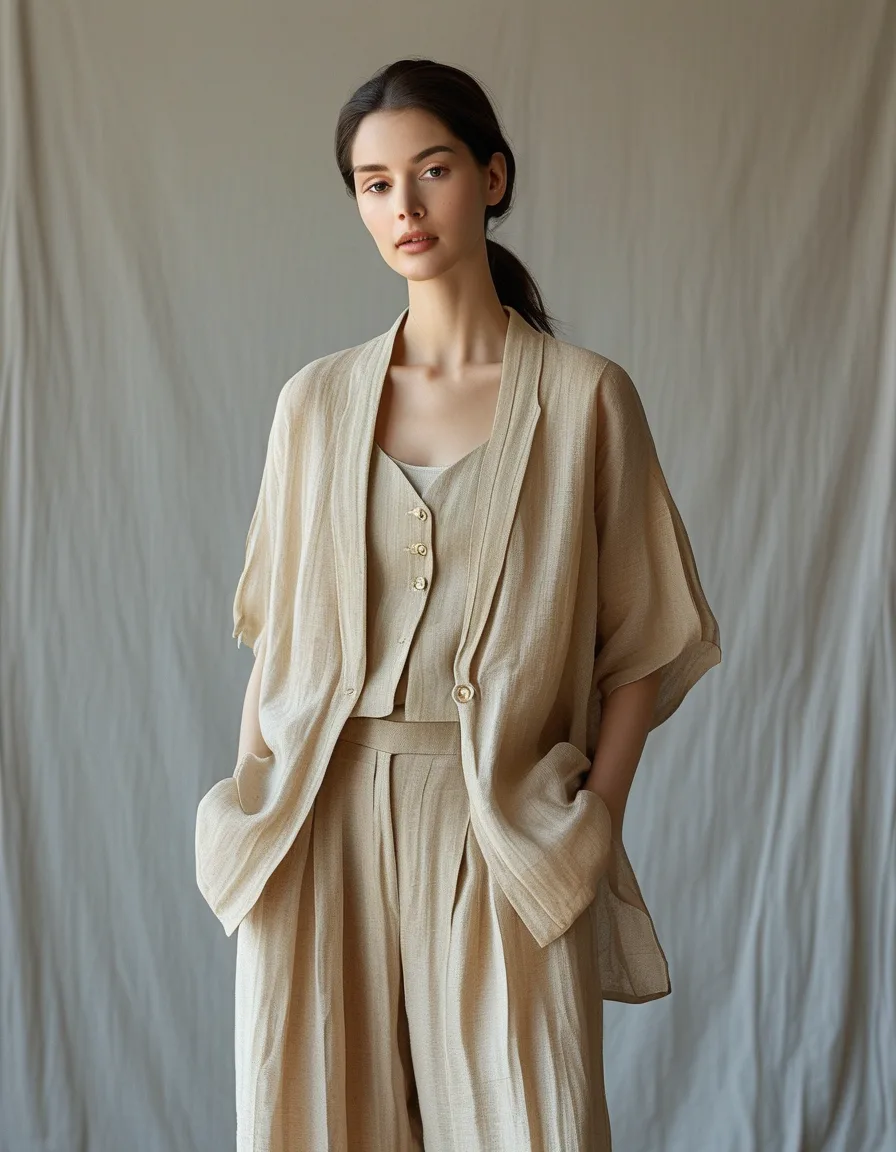
Reframe them. Linen wrinkles, and the wrinkles read as linen — the texture is what signals the fabric to anyone looking. The crumple is a credential, not a failure.

That said, the reframe only works if the cut agrees. A relaxed, unstructured linen blazer wears its creases as intended texture. A sharply tailored linen blazer with pressed lapels and a nipped waist fights the wrinkles and loses every time, which is why it looks rumpled rather than relaxed.

Buy the silhouette that agrees with the fabric. Soft shoulder, minimal structure, a little ease through the body.

At a glance

How do you style a linen blazer?

Four registers, from most casual to most formal:

Over a tee and jeans. Weekend structure. The blazer adds shape to an outfit that would otherwise have none, and it costs you almost no heat because you’ll be wearing it open.

With a matching linen trouser. The summer suit — the season’s genuine power move, and considerably more comfortable than its wool equivalent.

Over a slip dress. Texture contrast: the crisp, dry hand of linen against something fluid. This is the dinner version.

For the office. Linen blends with a touch of cotton or viscose hold their line better in conservative rooms, where a fully rumpled pure linen might read too relaxed. It’s a legitimate compromise, not a downgrade.

The Linen Blazer: Structure That Breathes

How do you care for a linen blazer?

Steam, don’t iron. Steam releases creases without crushing the texture that makes linen look like linen. A handheld steamer does a jacket in about four minutes.

Hang it, always. Linen creases hardest where it’s folded under pressure — which means the back of a chair and a packed suitcase are its two worst enemies.

Split the cleaning by construction. An unstructured, unlined blazer is often gentle-washable. A structured one with interfacing and shoulder padding should be dry-cleaned, because water distorts the internal construction, not the linen.

Choose the color for wrinkle tolerance. Naturals — oatmeal, sand, stone, olive — hide creases considerably better than navy or black, where every fold catches light.

How it works

Myth vs Fact: linen tailoring

Myth: Linen is too casual for a real jacket. Fact: Linen tailoring is a long-standing tradition in hot climates, and an unlined linen blazer over a shirt is standard warm-weather business dress in much of the world. It reads relaxed, not unserious.

Myth: You can iron linen crisp and keep it that way. Fact: You can iron it crisp for roughly one commute. Linen re-wrinkles the moment you sit, which is why steaming to relax the fabric works better than pressing to flatten it.

Myth: Linen blends are cheating. Fact: A linen-cotton or linen-viscose blend trades a little breathability for meaningfully better crease recovery. For office wear that’s a sensible trade, not a compromise in quality.

Frequently Asked Questions

Is a linen blazer too hot to wear in summer?

An unlined or half-lined linen blazer is one of the coolest structured layers available — the fiber moves air and moisture far better than synthetic tailoring. A fully lined linen jacket, by contrast, loses most of that advantage.

How do you keep a linen blazer from looking messy?

Choose a relaxed cut that wears creases as texture, steam rather than iron, hang it rather than folding it, and pick a natural color like oatmeal or sand where wrinkles catch less light. A blend with cotton or viscose helps if you need a sharper line.

Can you wear a linen blazer to the office?

Yes, particularly in a linen blend and a neutral color. Pair it with a simple trouser and a clean shirt or fine knit, and keep the fit relaxed but not oversized — the jacket should read considered, which is mostly a fit question rather than a fabric one.

TL;DR:

  • Linen moves air and moisture better than lined synthetic tailoring — but only if the jacket is unlined or half-lined
  • Wrinkles are the fabric’s signature; buy a relaxed cut that wears them well rather than sharp tailoring that fights them
  • Four registers: over a tee and jeans, as a matching summer suit, over a slip dress, or in a blend for the office
  • Steam instead of ironing, hang rather than fold, and split washing versus dry-cleaning by construction
  • Oatmeal, sand and olive hide creases far better than navy or black

Keep Reading

This article is for general styling and informational purposes only. Trends, sizing, availability and pricing may vary by brand and season.

linen blazersummer blazerbreathable tailoring

← All articles