Why a Blazer That Hangs Perfectly on a Hanger Can Still Pull Tightly Across the Back When Worn
A blazer that hangs with a clean, sharp shoulder line and no visible pulling anywhere on a hanger can still pull tight and restrictive directly across the back the moment it’s actually worn and both arms move forward, and the mismatch isn’t really about sizing — it’s that a hanger and a real back are two completely different shapes to fit around.

Why a Hanger Holds a Blazer in a Flat, Spread Shape
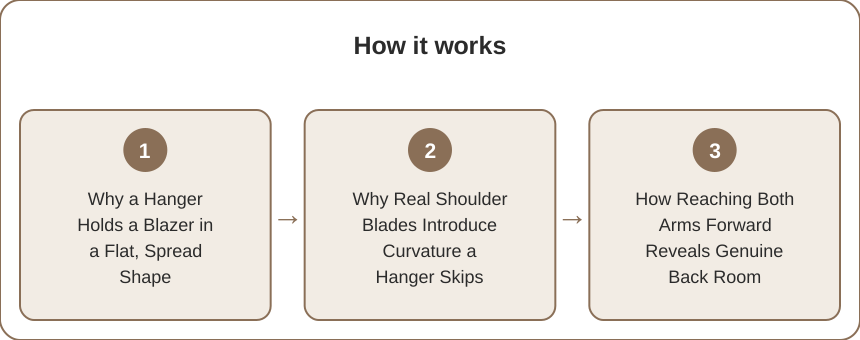
The distortion: a-hanger-holds-a-blazers-shoulders-in-an-artificially-flat-spread-position-that-shows-off-a-clean-shoulder-line-but-never-introduces-any-of-the-curvature-a-real-back-actually-has (a hanger holding a blazer’s shoulders in an artificially flat, evenly spread position that shows off a genuinely clean shoulder line, but never actually introduces any of the three-dimensional curvature that a real human back actually carries, per the blazer-fit-checkpoints logic — a-hanger-holding-a-blazers-shoulders-in-an-artificially-flat-evenly-spread-position-that-shows-off-a-clean-shoulder-line-but-never-introduces-any-of-the-curvature-a-real-human-back-carries), and the reframe (a hanger displaying a shape no back actually has)).

Why Real Shoulder Blades Introduce Curvature a Hanger Skips
The gap: real-shoulder-blades-and-a-curved-upper-back-introduce-three-dimensional-shaping-demands-that-a-flat-hanger-display-never-tests-for-especially-once-the-arms-move-forward (real shoulder blades and a genuinely curved upper back introducing three-dimensional shaping demands on the fabric that a flat hanger display never tests for at all, especially the moment both arms move forward into a reaching or driving position, per the blazer-shoulder-actual-fit-check-guide logic — real-shoulder-blades-and-a-genuinely-curved-upper-back-introducing-three-dimensional-shaping-demands-on-the-fabric-that-a-flat-hanger-display-never-tests-for-especially-once-both-arms-move-forward), and the frame (arm movement being the specific condition a hanger is structurally unable to simulate)).
How Reaching Both Arms Forward Reveals Genuine Back Room
The test: reach-both-arms-forward-together-as-if-driving-or-typing-while-trying-on-a-blazer-since-that-motion-directly-tests-back-room-in-a-way-standing-still-in-front-of-a-mirror-never-does (reaching both arms forward together, as if driving a car or typing at a desk, while actually trying on a blazer, since that specific motion directly tests real back room in a way that standing still in front of a mirror never comes close to doing, per the blazer-outfits-for-every-occasion logic — reaching-both-arms-forward-together-as-if-driving-or-typing-while-trying-on-a-blazer-since-that-motion-directly-tests-real-back-room-in-a-way-standing-still-in-front-of-a-mirror-never-does), and the frame (testing the actual motion a blazer will face daily, instead of only the still pose a mirror check offers).
A hanger holds a blazer’s shoulders in an artificially flat, evenly spread position that never introduces the three-dimensional curvature a real back actually carries, which is why real shoulder blades and forward arm movement can pull tight in ways a hanger display never predicts. Reaching both arms forward together, as if driving or typing, while actually trying on a blazer tests that real back room directly, catching a restriction the still pose of a mirror check never reveals.
Keep Reading
This article is for general styling and informational purposes only. Trends, sizing, availability and pricing may vary by brand and season.